
Why salt should not sit on the vehicle
Salt attracts moisture and collects in seams, wheel areas, lower panels, and behind trim. Paint protection helps the visible finish, but washing remains important because no surface product prevents salt from reaching every component underneath a vehicle.
Protect high-impact areas first
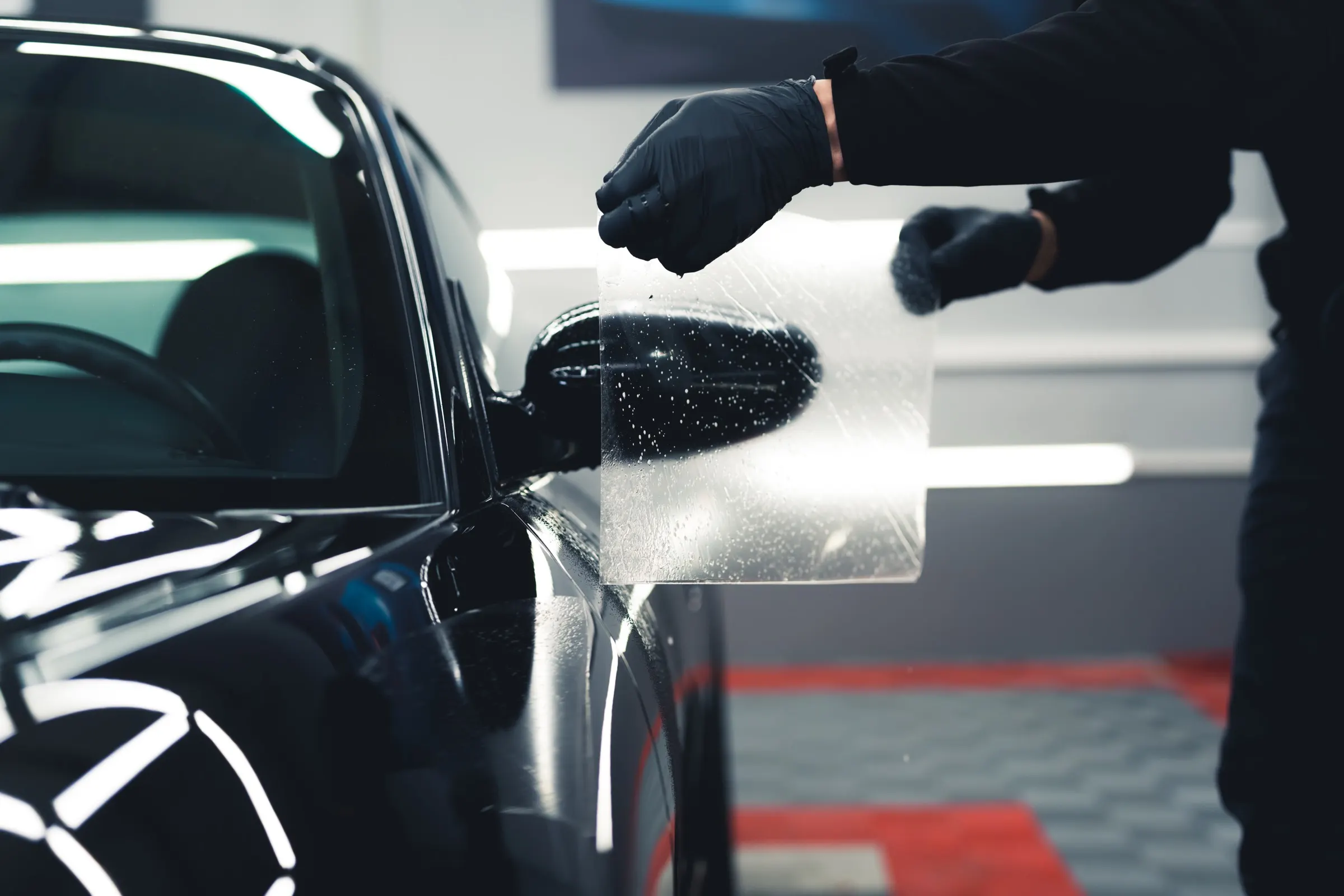
Winter grit and highway debris repeatedly strike the front bumper, hood edge, fenders, mirror caps, rocker panels, and lower doors. Paint protection film is useful in these physical impact zones because it creates a sacrificial barrier over the paint.
Use coating protection for easier maintenance
A quality protection system can reduce how strongly grime adheres and make careful washing easier. It should be installed over properly prepared paint and maintained with compatible wash products.
- Rinse loose grit before touching the paint.
- Avoid automatic brushes that retain abrasive debris.
- Dry with clean, soft towels or filtered air where possible.
- Do not ignore wheels, wheel wells, and lower body sections.
Plan a post-winter inspection
Once road conditions improve, inspect the paint, film edges, wheels, and interior carpets. A spring detail removes residue and gives you a chance to address chips or contamination before another season of driving.
Common questions
How often should I wash road salt off my car?+
Wash when buildup is visible and when conditions allow safe drying. Frequency depends on driving, weather, and storage, but avoid letting heavy salt layers remain for long periods.
Is a coating enough for stone chips?+
A coating is not the same as impact film. Choose PPF for areas where protection from gravel and chips is the priority.